

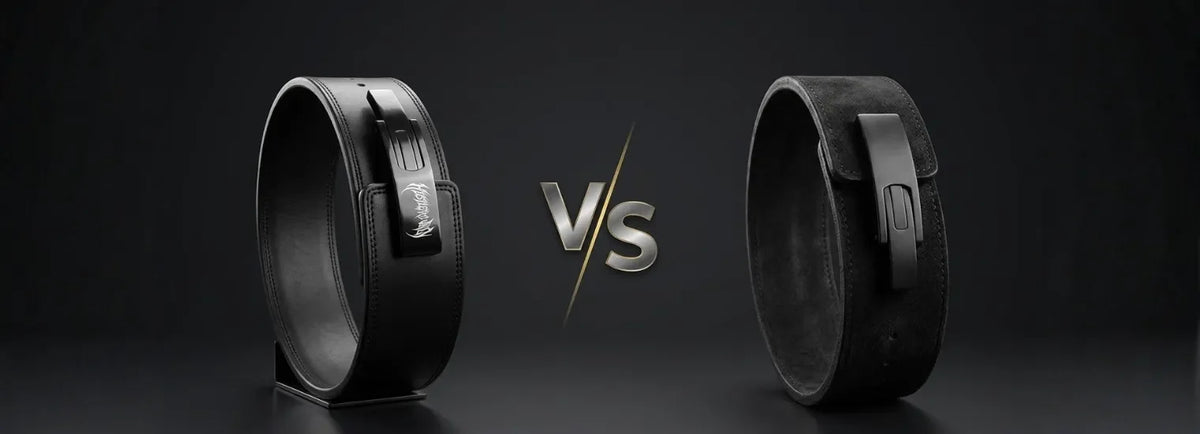
A 10mm weightlifting belt is the best choice for 90% of gym lifters because it conforms to your waist within two weeks and provides enough stiffness for squats and deadlifts up to 250 kg. A 13mm belt offers 30% more leather thickness for maximum spinal rigidity during super-heavyweight powerlifting, though it takes months to break in and often bruises the ribs during deadlifts.
Walking into a gym in Dubai with a brand-new leather belt that feels like a piece of oak wrapped around your torso is a rite of passage. Most lifters assume that thicker leather automatically equals a bigger squat. In practice, if a belt is so stiff that you cannot get into your starting deadlift position without the edges digging into your hip bones, that extra three millimeters of leather will cost you kilos on the bar.
Choosing between a 10mm and a 13mm belt comes down to your body weight, the movements you train most, and how much discomfort you are willing to tolerate during the break-in phase.
Side-by-side comparison: 10mm vs. 13mm specs
Both 10mm and 13mm belts share the standard 4-inch (10 cm) width required for maximum abdominal contact, which is the legal limit in raw powerlifting federations like the IPF and USPA. The difference lies entirely in the cross-sectional density of the vegetable-tanned leather core.
| Specification | 10mm Weightlifting Belt | 13mm Weightlifting Belt |
| Total Thickness | 10 millimeters (approx. 3/8 inch) | 13 millimeters (approx. 1/2 inch) |
| Standard Width | 4 inches (10 cm) all around | 4 inches (10 cm) all around |
| Break-In Period | 1 to 2 weeks of heavy sessions | 4 to 8 weeks of heavy sessions |
| Torso Mobility | Moderate flex for deadlift setups | Zero flex, locks the lumbar spine |
| Ideal Bodyweight | Under 110 kg (242 lbs) | Over 110 kg (242 lbs) or 270 kg+ squatters |
| Best Primary Lifts | Squats, deadlifts, overhead press, rows | Low-bar squats, bench press, strongman |
How thickness affects intra-abdominal pressure
A lifting belt works by preventing your stomach wall from expanding outward when you take a deep breath into your diaphragm. When your abs push out against a solid leather strap, the pressure inside your abdominal cavity spikes. That internal pressure supports the front of your lumbar spine while your spinal erectors support the back.
Here is the catch that many beginners miss: leather only needs to be stiff enough not to stretch under the force of your abdominal wall. Even the strongest human core cannot stretch a 10mm slab of genuine cowhide or suede leather.
What a 13mm belt actually changes is edge rigidity. When your torso folds forward at the bottom of a heavy low-bar squat, a 10mm belt will contour slightly to the shape of your ribs and iliac crest. A 13mm belt refuses to bend at all, acting like an external splint that physically blocks your torso from caving over.
Why 10mm is the gold standard for everyday lifters
If you only want to buy one belt to keep in your gym bag for the next five years, a 10mm belt from our weightlifting belts lineup will handle every barbell movement on your program.
Because 10mm leather has a slight natural give right out of the box, it solves the three biggest headaches lifters face with heavy support gear:
-
Getting into a conventional or sumo deadlift setup requires hip flexion. When you hinge down to grab the bar, a 10mm belt sits flat against your lower back without pinching the skin between your bottom rib and hip bone.
-
You can wear it across different movement patterns. A 10mm belt works just as well on heavy barbell rows, push presses, and hack squats as it does on a one-rep max back squat.
-
It heats up and molds to your waist quickly. After five or six workouts in a warm gym, the suede inner lining takes the shape of your lower back curve, eliminating the air gap that stiff belts often leave behind the spine.
Who actually needs a 13mm belt?
A 13mm belt is a specialist tool built for maximal squat attempts and heavier weight classes. You will get the most value out of a 13mm thickness if you fall into one of three categories:
-
Competitive powerlifters in the 105 kg, 120 kg, or super-heavyweight classes who carry more torso mass and generate higher sheer forces against the belt.
-
Low-bar squat specialists who rely on an aggressive forward lean and want the top edge of the belt to push back against their ribcage at the bottom of the hole.
-
Strongman athletes performing yoke walks, log presses, and axle deadlifts where the spine stays under static vertical compression for 30 to 60 seconds at a time.
For lighter lifters or athletes with a short torso (less than four inches of space between the bottom of the ribcage and the top of the pelvis), a 13mm belt often causes deep bruising along the hip bones. Many competitive powerlifters actually keep two belts in their kit: a 13mm belt strictly for heavy squats, and a 10mm belt for deadlifts where hip mobility matters more.
Does buckle style change how thick a belt feels?
The locking mechanism you choose changes the effective thickness at the front of your waist. Whether you prefer leather lever belts or traditional leather prong belts, the leather overlaps at the front buckle right where your abs push the hardest.
On a lever belt, the leather tail tucks smoothly behind the latch plate, creating a double layer of leather (20mm total on a 10mm belt, or 26mm total on a 13mm belt) across a six-inch section of your front abs. Because the steel lever pulls the ends together mechanically, you can get a 10mm lever belt a full notch tighter than you could ever pull a 13mm prong belt by hand.
On a prong belt, you have to bend the leather tail backward through a steel roller loop to push the prong into the hole. Bending 10mm leather through a roller takes two seconds. Bending 13mm leather through a roller after a grueling set of squats when your hands are shaking is notoriously difficult until the belt is fully broken in.
How to break in a stiff leather belt without ruining it
When a new belt arrives, resist the urge to run it over with your car, soak it in water, or bake it in the sun. Moisture and extreme UAE summer heat rot natural leather fibers and cause the glued plies inside the belt core to separate.
Instead, break your belt in using manual rolling and body heat:
-
Unfasten the belt and roll it up tightly inward in the direction it wraps around your waist, then unroll it and roll it backward in the opposite direction ten times before your workout.
-
Work your way down the length of the strap with both hands, bending the leather back and forth every two inches specifically around the prong holes or lever screw section.
-
Put the belt on during your warm-up squat sets at one notch looser than your working tightness so your body heat warms the suede while you move through a full range of motion.
Frequently asked questions
Are both 10mm and 13mm belts IPF legal for powerlifting meets?
Yes, the International Powerlifting Federation (IPF) and most local UAE powerlifting meets allow a maximum belt thickness of 13mm and a maximum width of 10cm (4 inches). Both 10mm and 13mm belts meet official competition regulations provided they do not have extra padding or non-approved Velcro fasteners.
Will a 10mm leather belt stretch out over time?
A genuine 10mm vegetable-tanned leather or suede powerlifting belt will not stretch out longitudinally. It will contour to the curve of your waist and hips during the first two weeks of use, which might let you tighten the buckle by one extra hole as the stiff edges soften, but the leather fibers themselves remain locked in length for years.
Why does my lifting belt bruise my ribs and hips on deadlifts?
Belt biting happens when the top and bottom edges of a stiff belt pinch the soft tissue between your ribcage and pelvis as you bend forward to reach the barbell. Switching to a 10mm belt, wearing the belt slightly higher on your torso during deadlifts, or loosening the buckle by one hole usually stops the bruising immediately.
Should women choose a 10mm or 13mm lifting belt?
Most female lifters find a 10mm belt far more comfortable because women generally have a shorter distance between the bottom of the ribcage and the top of the hip bone. A 13mm belt often leaves no room for the torso to hinge without digging into the ribs, whereas a 10mm leather or self-locking belt molds to the waist without restricting breathing.
Share:
Best Exercises Using Ankle Straps (Gym Guide for UAE)
Custom Weightlifting Belts in the UAE: How to Design Your Own Personalised Lifting Belt