

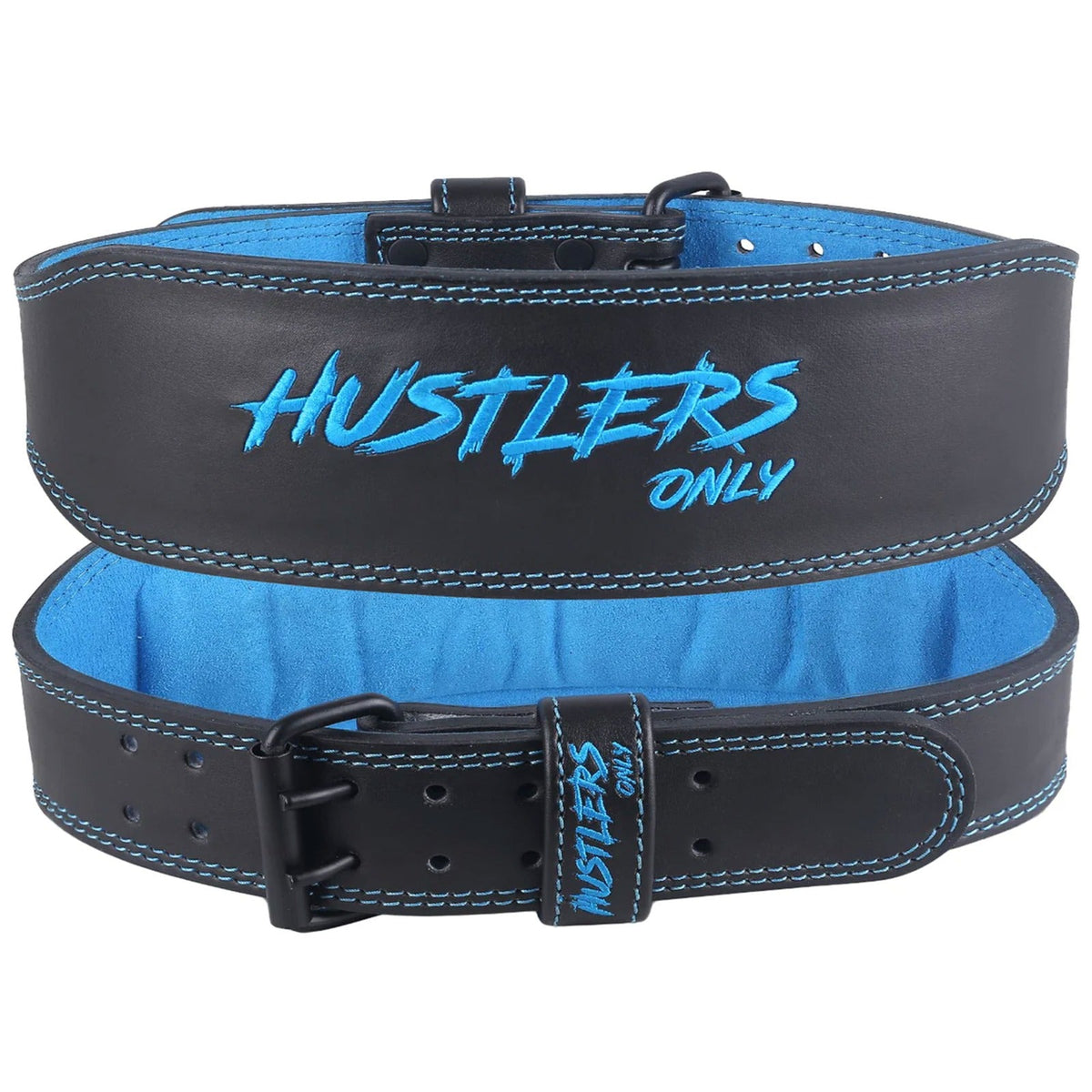
"Weightlifting belt" is used to describe almost any gym belt, but there are really two different designs with two different jobs. A powerlifting belt is built for the squat, bench press and deadlift. An Olympic weightlifting belt is built for the snatch and the clean and jerk. As more gyms in Dubai, Abu Dhabi and Sharjah add lifting platforms and Olympic lifting classes, it's worth knowing which one you actually need.
The powerlifting belt
Powerlifting belts are designed for slow, very heavy lifts where maximum bracing matters most. They usually have:
- The same width all the way round, typically 10cm (about 4 inches), so your stomach has something to push against at the front as well as the back
- Thick, stiff leather, most often 10mm or 13mm
- A lever or prong buckle that locks tight
That uniform width is the key feature: when you brace for a heavy squat or deadlift, you push your whole midsection out against the belt, front included. Our 10mm leather lever belts and prong belts follow this design.
The Olympic weightlifting belt
The snatch and clean and jerk are fast, explosive lifts with very deep catch positions. A thick, wide belt at the front can get in the way at the bottom of a clean, so Olympic lifting belts tend to be:
- Tapered or slimmer at the front, wider at the back
- More flexible, using thinner leather or nylon
- Quick to adjust, often with a Velcro or self-locking closure
The aim is support without restricting movement or the bar path.
Key differences
| Powerlifting belt | Olympic weightlifting belt | |
|---|---|---|
| Main lifts | Squat, bench press, deadlift | Snatch, clean and jerk |
| Shape | Uniform width | Often tapered at the front |
| Material | Thick leather | Thinner leather or nylon |
| Stiffness | Very stiff | More flexible |
| Closure | Lever or prong | Prong, Velcro or self-locking |
Competition rules in brief
- Powerlifting: federations following international powerlifting rules usually allow belts up to 10cm wide and 13mm thick, worn over the singlet, with a lever or prong buckle. Many also require belts from approved manufacturers.
- Olympic weightlifting: international weightlifting rules currently allow belts up to 12cm wide, worn over the costume.
Rules can change, so always check your federation's latest rulebook before you compete.
What about general gym training?
Most people in UAE gyms aren't competing, and that's fine. For general strength training, with squats, deadlifts, presses and rows, a 10mm uniform-width belt is the most versatile option. If your sessions are more about functional fitness, circuits or Olympic-style lifts, a flexible nylon self-locking belt may suit you better. Read leather vs nylon lifting belts for a full comparison.
How to choose
- Look at your main lifts. Heavy squats and deadlifts point to a powerlifting-style belt; snatches and cleans point to a flexible belt.
- Decide on the buckle. See lever vs prong belts.
- Pick a thickness. Our guide to 10mm vs 13mm belts helps here.
- Get the size right. Use our lifting belt size guide.
Powerlifting vs weightlifting belt FAQs
Can I use a powerlifting belt for Olympic lifts?
Yes, many lifters do, especially for heavy cleans and front squats. Some find the stiffness restrictive in very deep positions and switch to a flexible belt for snatches.
Can I use an Olympic weightlifting belt for powerlifting?
For training, yes, but you'll get less front support. In competition, it must meet the powerlifting federation's rules.
Is a tapered belt bad?
No, it's just designed for a different purpose. It's comfortable in deep positions but gives less support at the front.
Which belt should a beginner buy?
For general strength training, a 10mm uniform-width leather belt is the best all-rounder. Our ultimate guide to lifting belts in the UAE explains the basics.
Shop belts
Browse our weightlifting belts collection, or design a powerlifting-style belt with your name on it in our custom belt designer. We deliver to Dubai, Abu Dhabi, Sharjah and every other emirate, usually within 3 to 5 working days of dispatch, with free standard shipping on orders of 500 AED or more.
Share:
Leather vs Nylon Lifting Belts: Which Suits Your Training in the UAE?
How to Break In and Care for a Leather Lifting Belt in the UAE Heat